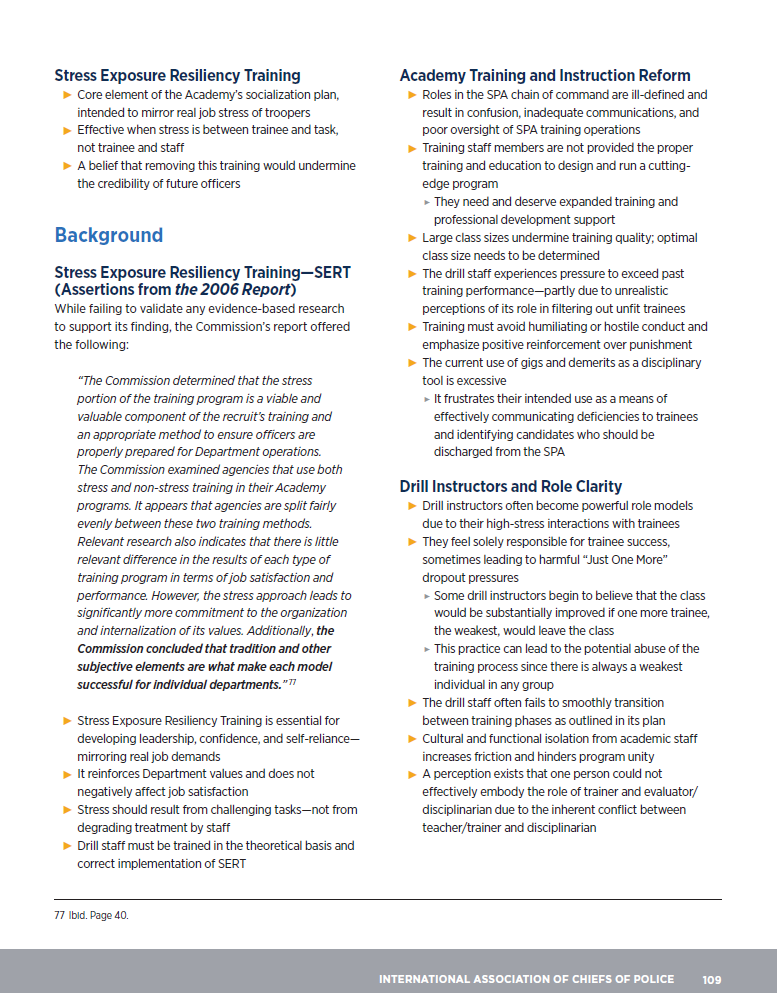
Massachusetts State Police Academy Report Reveals Chaos, Humiliation & “Punitive Rituals”
In the wake of Recruit Trooper Enrique Delgado-Garcia’s death, Colonel Geoffrey Noble has halted the next incoming recruit class at the Massachusetts State Police Academy until major reforms identified in a newly released independent assessment can be addressed.
I’ve been reading through the recent Massachusetts State Police Academy Assessment: A Comprehensive Operational and Cultural Assessment, released by Boston 25 News, and honestly, some of the findings in this report are absolutely eye-opening.
The decision to stop the next recruit class comes after the International Association of Chiefs of Police completed an in-depth review of the New Braintree Academy. That review paints a troubling picture of the culture, leadership instability, and training practices inside the facility.
I recently noted a lot of this in a previous article after speaking off the record with a former MSP trooper about the culture inside the Academy. That former trooper was very honest and forthcoming, describing the environment as extremely toxic and unforgiving.
Now, this report appears to back up many of those concerns. It doesn’t describe isolated incidents. Instead, investigators repeatedly point to what they call “systemic and cultural challenges” impacting trainee safety, morale, learning, and retention.
These aren’t minor criticisms buried inside a government report. These are findings involving humiliation, punitive rituals, chaos, leadership failures, and a culture investigators believe became deeply resistant to modernization and reform.
Below are the five most important pages in the report that I’ve found so far.
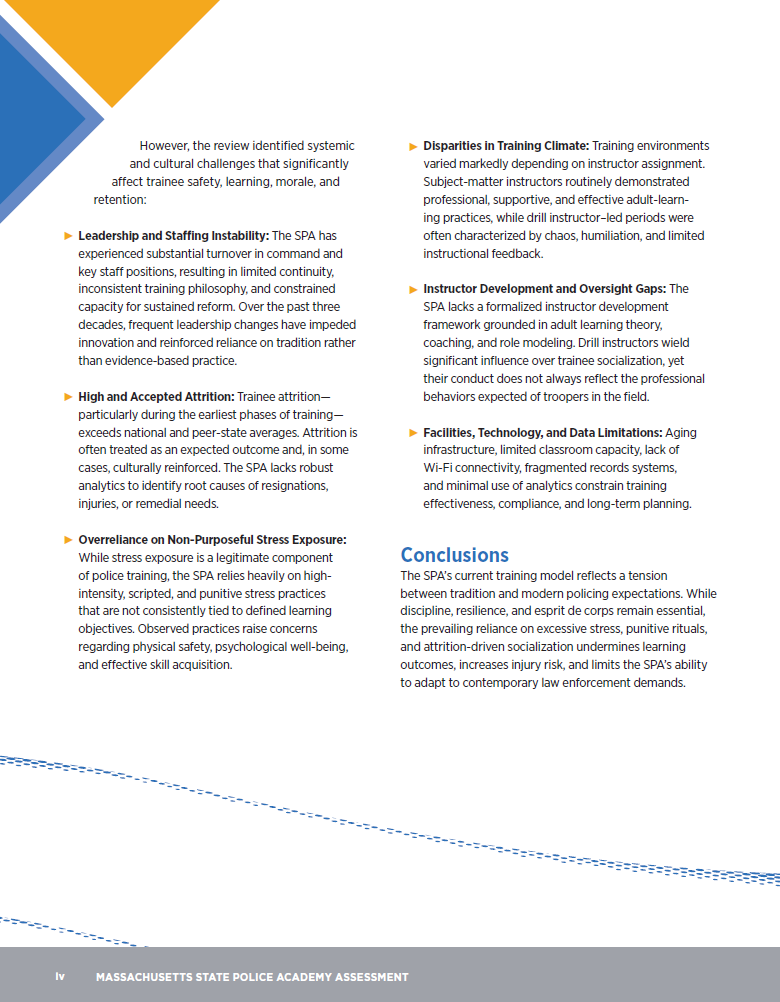
Page iv: “Chaos, Humiliation, and Punitive Rituals”
This page that sets the tone for the entire report.
This is one of the most explosive pages in the entire document because the language investigators use is incredibly direct.
The report states that drill instructor-led periods inside the Academy were often characterized by:
“chaos”
“humiliation”
“limited instructional feedback”
Investigators also describe an “overreliance” on punitive stress exposure that raised concerns about physical safety and psychological well-being.
The report makes clear that stress itself is not the problem. The issue is that much of the stress being applied inside the Academy allegedly lacked meaningful learning objectives and instead became ritualistic punishment.
The page also contains one of the report’s strongest conclusions: that excessive stress, punitive rituals, and attrition-driven socialization were actively undermining learning outcomes and increasing injury risks.
In many ways, this page is the foundation of the entire report.
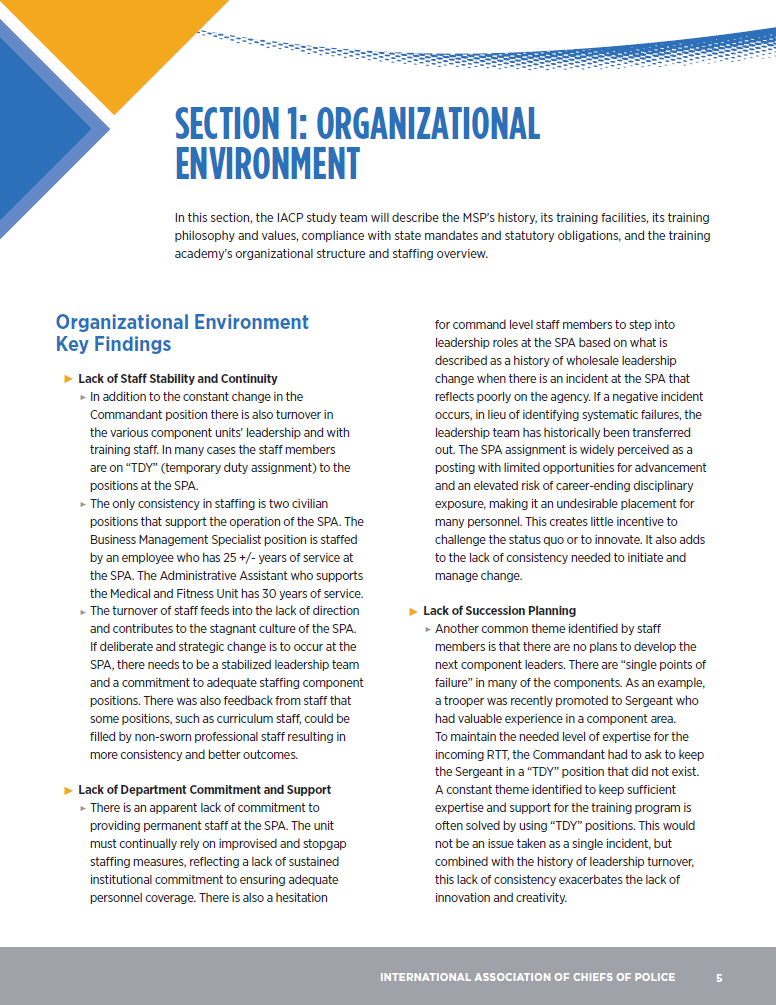
Page 5 — “Career Ending Assignment”
This page exposing fear inside MSP leadership
One of the most eye-opening revelations in the report comes when investigators describe how Academy assignments are viewed internally inside the Massachusetts State Police.
According to the report, many personnel see leadership positions at the Academy as: “career-ending disciplinary exposure.”
That line says everything.
The report explains that when major incidents occur at the Academy, leadership teams have historically been removed instead of broader systemic failures being addressed. Investigators concluded this creates a culture where personnel are afraid to challenge the status quo or push meaningful reforms.
The report also reveals:
21 different Commandants in 33 years
an average tenure of roughly 1.5 years
and constant turnover among leadership and instructors.
Investigators ultimately concluded the instability helped create a stagnant culture overly dependent on tradition instead of evidence-based training practices.
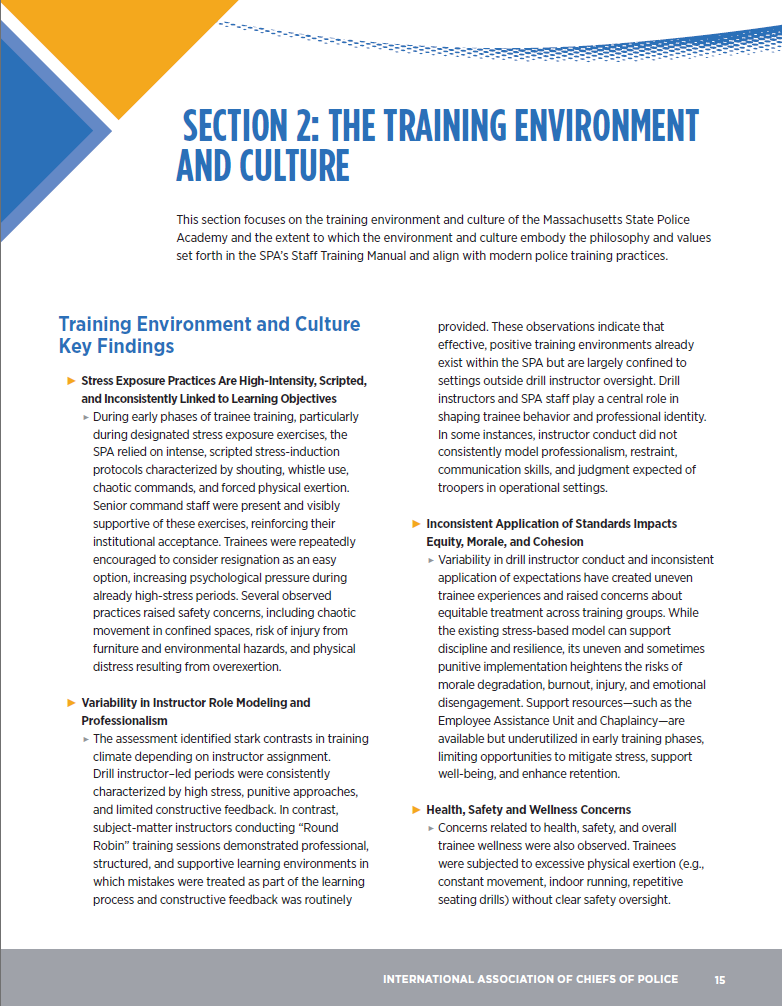
Page 15 — “Recruits Encouraged To Resign”
One of the most disturbing cultural findings
This page may become one of the most discussed sections of the entire report.
Investigators describe high-intensity stress exercises involving:
shouting
whistles
chaotic commands
forced physical exertion
and public pressure
But the line that stands out most is when investigators write that recruits were:
“repeatedly encouraged to consider resignation as an easy option.”
That is a stunning finding.
The report essentially argues there was an institutional mindset where quitting was normalized instead of viewed as a warning sign of deeper systemic issues.
In the wake of Enrique Delgado-Garcia’s death, this section becomes even more significant because investigators repeatedly raise concerns about unmanaged stress, overexertion, and safety oversight.
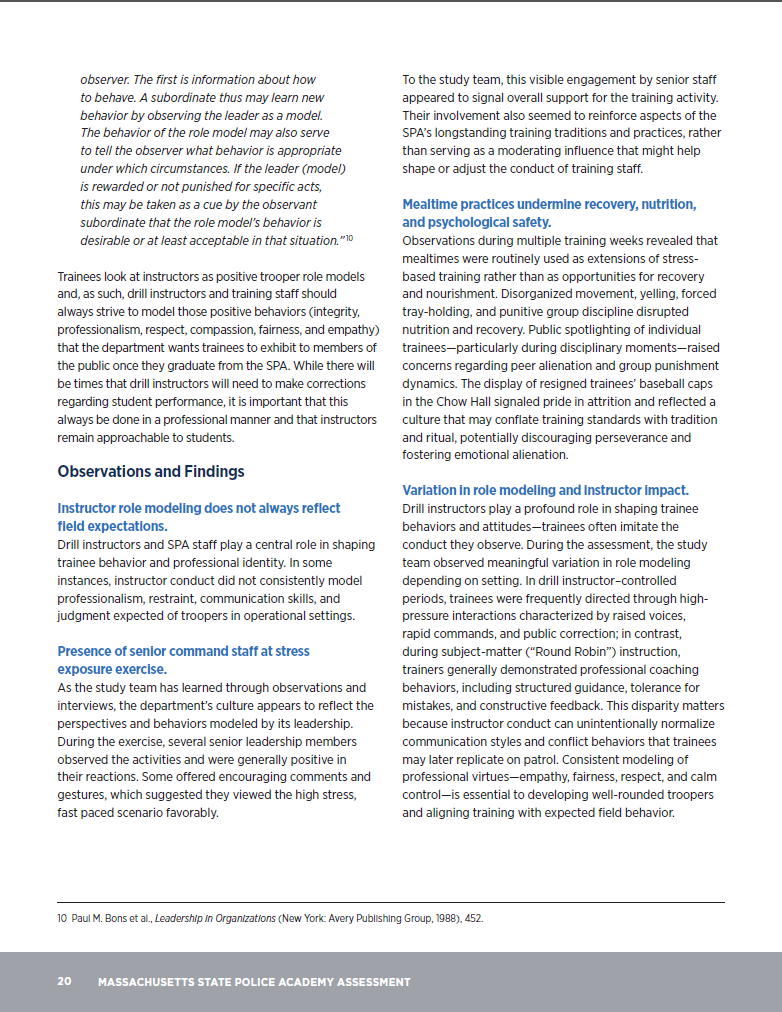
Page 20 — “Pride In Attrition”
Possibly the single most explosive page in the report
This page contains what may ultimately become the defining image and quote from the entire assessment.
Investigators observed resigned trainees’ baseball caps displayed publicly in the Academy Chow Hall. According to the report, the display:
“signaled pride in attrition.”
That statement is devastating.
The report is essentially saying there were visible symbols inside the Academy celebrating or reinforcing the idea of recruits quitting.
Investigators also criticized mealtime practices where trainees experienced:
yelling
chaotic movement
public discipline
and stress during meals instead of recovery and nourishment.
The page paints a picture of an environment where stress and humiliation were embedded into even the most basic parts of daily Academy life.
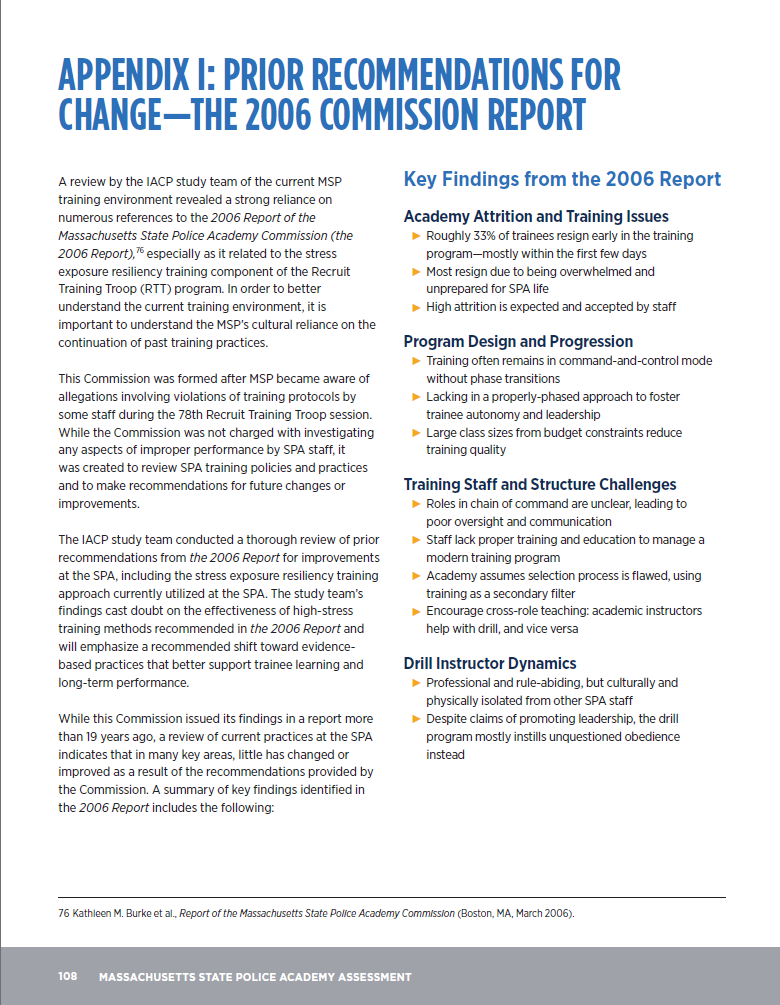
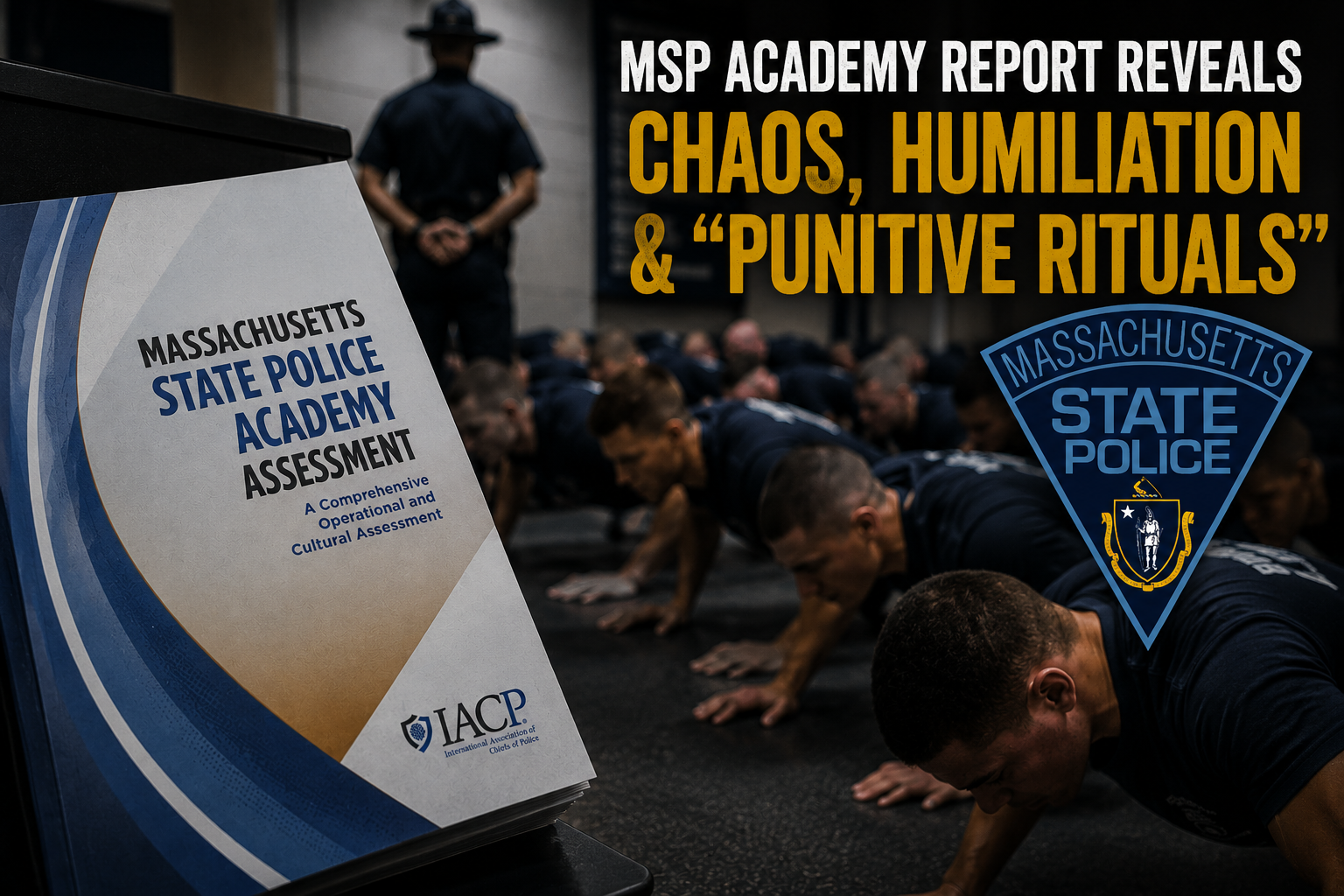
Pages 108–110 — The 2006 Warnings
The pages that may raise the biggest questions of all
The final bombshell in the report comes in Appendix I, where investigators revisit concerns raised nearly 20 years ago during a prior review of the Academy.
This section is incredibly important because it suggests many of the same cultural and leadership problems identified in 2026 were already being discussed back in 2006.
That raises the unavoidable question:
How many warning signs existed about the culture inside the Massachusetts State Police Academy long before Enrique Delgado-Garcia lost his life?
The report repeatedly emphasizes that many of these problems were not isolated incidents, but deeply rooted institutional and cultural issues that developed over decades.
And now, in the wake of Delgado-Garcia’s death, those warnings are receiving a level of public scrutiny the Academy has likely never faced before.