Can Chief Michael Daniels Turn Canton PD Around?
Canton, MA has a new police chief, and on paper, Michael Daniels says a lot of the right things.
He talks about purpose. He talks about collaboration. He talks about rebuilding trust. He points to staffing shortages, outdated systems, inefficient command structure, problems with dispatch, radio infrastructure, internal affairs procedures, and the need for better communication with the public.
Those are all real issues.
But the bigger question is this: Can Daniels actually turn Canton around, or is he stepping into a department where the problems run deeper than policy updates and new procedures?
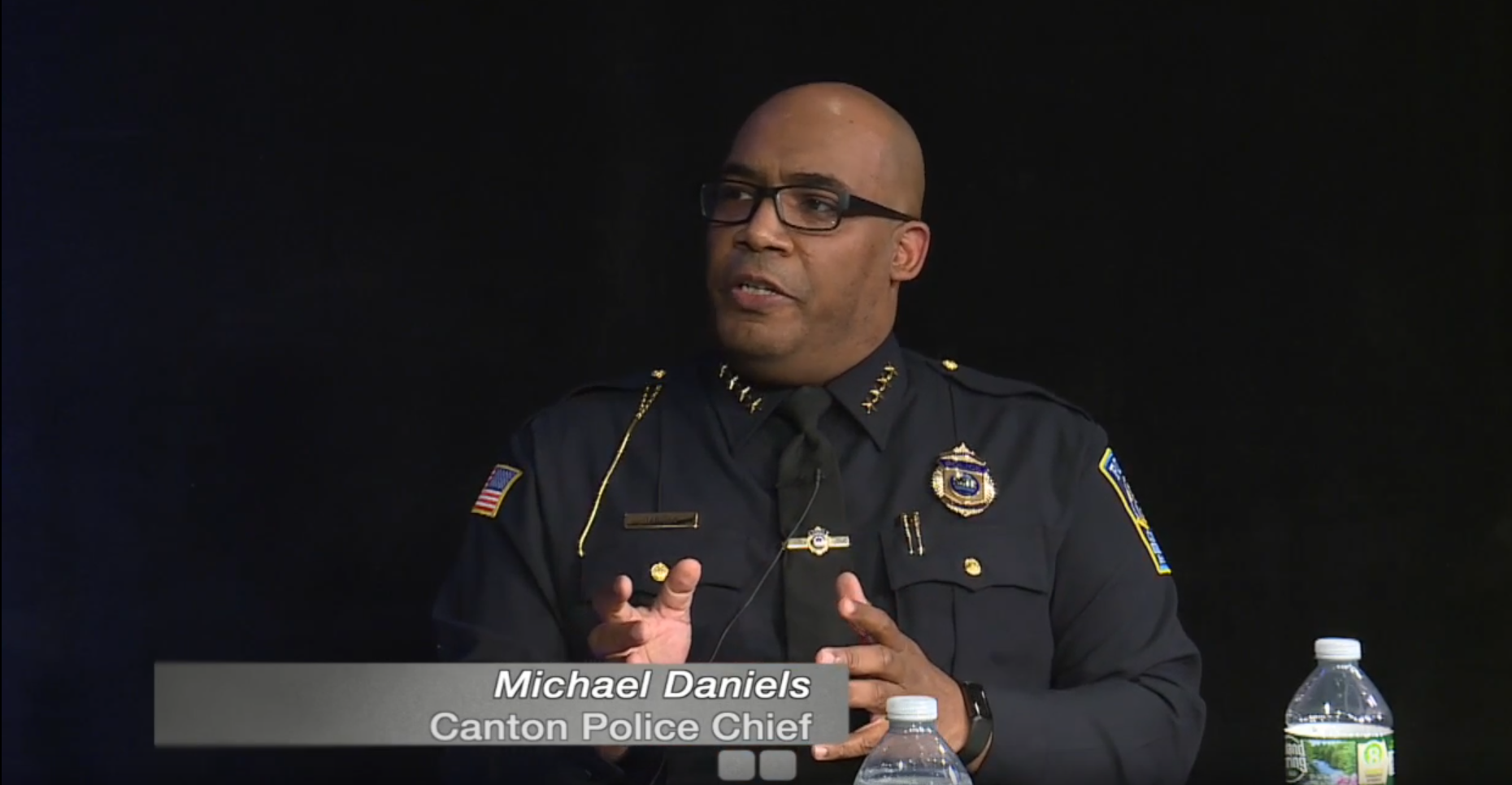
Photo: Canton Community TV
Based on his interview with Canton Community Television, (VIDEO) Daniels appears to understand that Canton Police Department is not dealing with a simple public relations problem. This is a department facing a major trust deficit, especially in the aftermath of the John O’Keefe case and the public scrutiny that followed. The community is not just asking for better messaging. People want accountability, transparency, and proof that the culture inside the department is changing.
And that is where the skepticism comes in.
Daniels seems comfortable talking about systems, structure, staffing, leadership, and modernization. He discussed the need for regional dispatch so patrol officers are not tied up answering calls instead of being on the road. He talked about unreliable radios, department-issued cell phones, body-worn cameras, license plate readers, and new internal affairs protocols. Those are not small things. They matter.
But technology and policy do not fix trust by themselves.
The community’s concern is not simply whether Canton PD has enough officers or better radios. The concern is whether anyone inside the department will truly be held accountable when things go wrong. That is the word many people were listening for: accountability.
And if Daniels avoids that word, people notice.
To be fair, a new chief cannot walk in on day one and start making public accusations. He has legal limits, union issues, personnel rules, and due process concerns. He also has to manage morale inside a department that is short-staffed and under intense public pressure.
But Canton residents have already heard enough polished language over the years. They have seen enough “we are reviewing it,” “we are improving procedures,” and “we are committed to transparency.” At some point, the public wants to know whether leadership is willing to identify what went wrong, who failed, and what consequences followed.
That is the difference between reform and rebranding.
Daniels may genuinely want to fix the department. His background in policy, accreditation, public information, and civil rights could be valuable. His willingness to acknowledge inefficiencies and support changes like updated internal affairs forms, work-issued phones, a clinician, body cameras, and command realignment suggests he knows the department needs work.
But Canton does not need a chief who simply manages the fallout.
Canton needs a chief who is willing to confront the culture.
That means answering hard questions. It means being direct with the public. It means not hiding behind vague language when people are asking for accountability. It means showing residents that complaints will be taken seriously, investigations will be handled properly, and officers will not be protected simply because they wear the badge.
There is also the issue of community engagement. Daniels talked about collaboration, but collaboration has to be visible. Canton PD cannot rebuild public trust only through interviews, meetings, and formal statements. The department needs to show up in the community in a way that feels real, not staged. Open forums, neighborhood events, community days, direct conversations with residents, and consistent public updates would go a long way.
Still, even that will not be enough if people believe the department is still protecting itself first.
That is the mountain Daniels has to climb.
He is not just taking over a police department. He is taking over a department whose credibility has been badly damaged in the eyes of many people after the death of Boston Police Officer John O’ Keefe and the handing of Karen Read’s case. Some residents may be willing to give him a chance. Others will remain skeptical until they see action.
And honestly, skepticism is fair.
Because Canton has reached the point where words are not enough.
Daniels may be the right person for the job. He may have the background, the temperament, and the plan to begin moving the department in a better direction. But the real test will not be whether he can give a strong interview. The real test will be whether he can deliver measurable change inside a department that many believe has avoided accountability for far too long.
I want Chief Daniels to succeed. I really do.
Canton needs him to succeed. The department needs stability, the community needs trust restored, and the officers who are doing the job the right way need real leadership.
But wanting him to succeed does not mean giving him a free pass.
Success in Canton cannot just be better interviews, new policies, updated equipment, or polished language. It has to be real transparency. It has to be accountability. It has to be a department that proves to the public that the old way of doing business is over.
I’m rooting for Daniels because Canton needs a reset.
But the community has every right to remain skeptical until they see action, not just promises.
This article was adapted from a recent LTL Media livestream and edited for clarity