The IACP Report Reads Like a Blueprint for the Delgado-Garcia Case
The newly released IACP assessment of the Massachusetts State Police Academy may have opened one of the clearest windows yet into the culture prosecutors say contributed to the death of Recruit Enrique Delgado-Garcia.
For months, the Commonwealth’s theory has focused on a serious allegation: that Defensive Tactics training at the Academy moved away from approved lesson plans, safety protocols, and documented training goals.
After reading the IACP report, the parallels are hard to ignore.
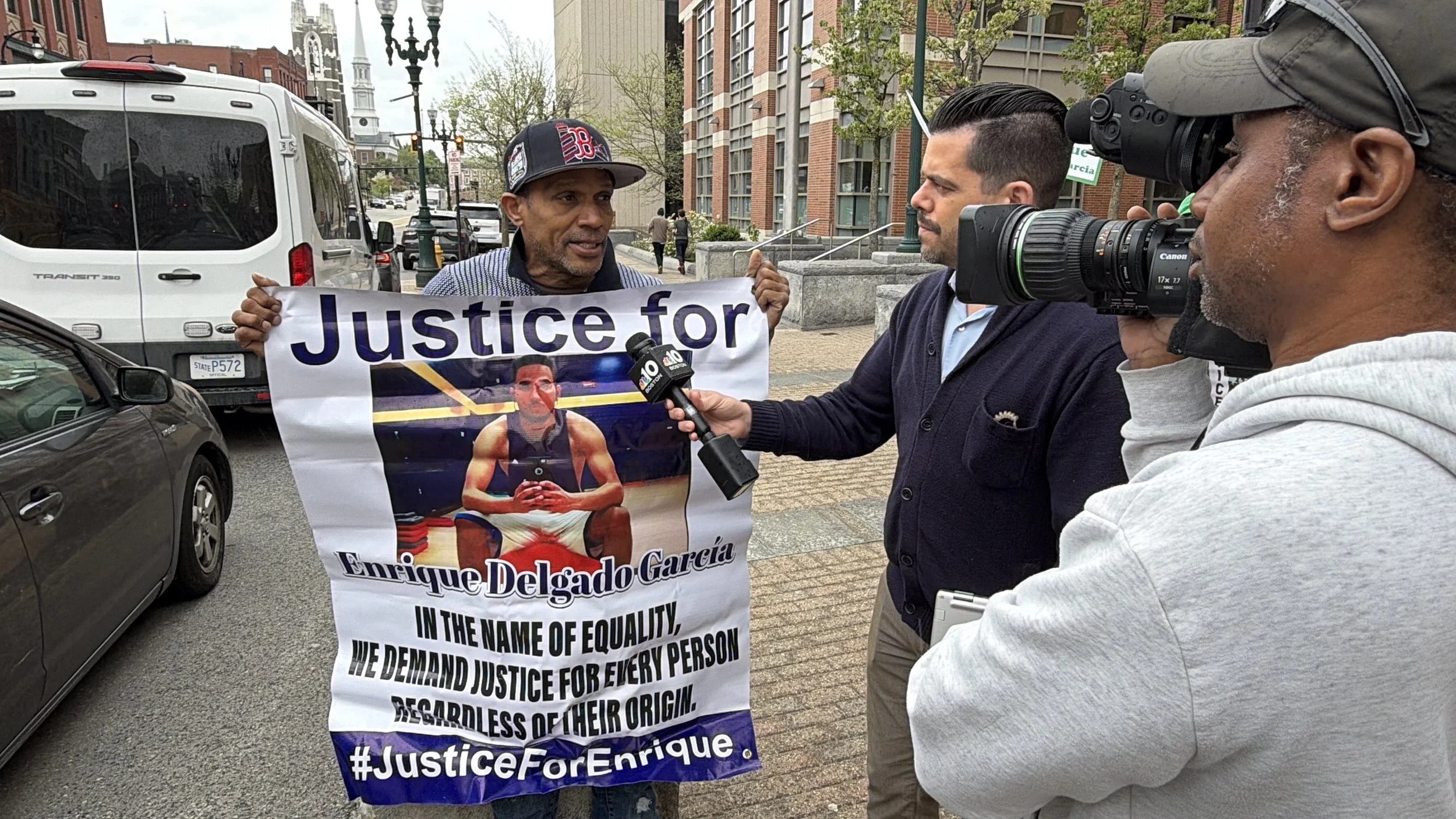
A family member shows support for Delgado-Garcia outside Worcester Superior Court on May 6th. Photo by LTL Media
The report describes an Academy environment that relied heavily on tradition, improvised stress-based training, inconsistent oversight, and training methods that were not always connected to clear learning objectives.
That matters when you compare it to the Commonwealth’s allegations against members of the MSP Defensive Tactics Unit.
According to the Commonwealth’s Statement of the Case, prosecutors allege Academy staff conducted unauthorized, unapproved, and poorly supervised boxing-related sparring exercises in the days before Delgado-Garcia’s death.
But one allegation stands out.
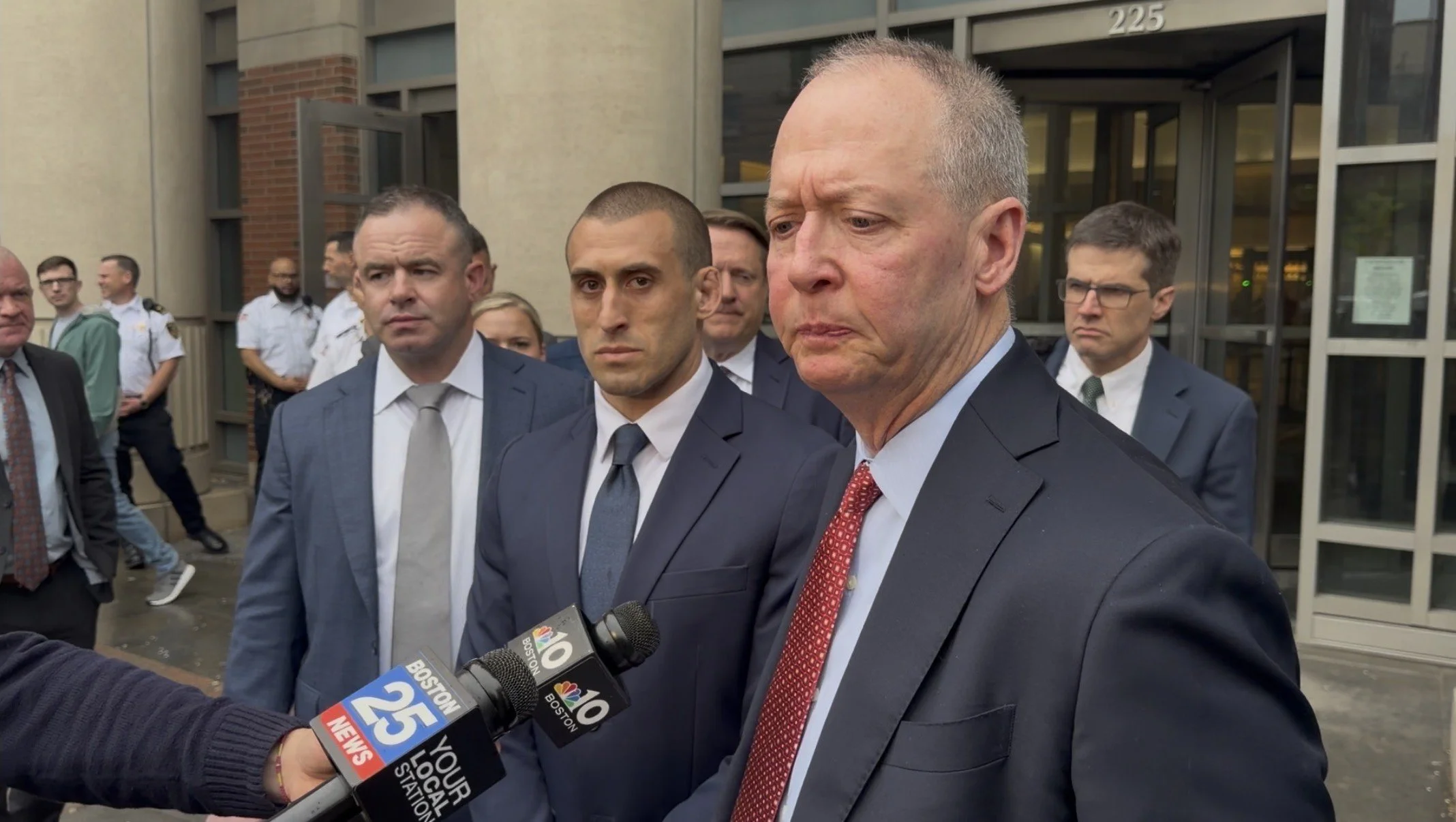
Lamonte outside Worcester Superior Court on May 6th after facing charges of involuntary manslaughter and causing serious bodily injury. Photo by LTL Media
Trooper Casey LaMonte, along with Sgt. Jennifer Penton, Trooper Edwin Rodriguez, and Trooper David Montanez, has been charged in connection with the death of Enrique Delgado-Garcia.
Prosecutors claim LaMonte later accessed and revised an already-approved lesson plan after Delgado-Garcia had been critically injured. They allege LaMonte added language suggesting “Boxing Fundamentals” had already been included in the approved Defensive Tactics training for September 11, 2024.
If true, that turns the lesson-plan issue into something much bigger than paperwork.
The IACP report suggests the Academy had problems with instructional structure and accountability long before Delgado-Garcia’s death. The report criticized training that was not always tied to documented learning objectives or formal lesson plans.
It also found that some instructors relied on punitive stress exercises, that some training activities were disconnected from clear instructional goals, and that Academy culture often leaned more on tradition than modern training standards.
That sounds very similar to what prosecutors now allege happened inside the Defensive Tactics Unit.
The Commonwealth claims Delgado-Garcia participated in unauthorized sparring sessions on September 11, where recruits allegedly boxed without proper medical oversight and despite signs that Delgado-Garcia may have been suffering concussion-like symptoms.
The next day, during “Boxing Day,” Delgado-Garcia suffered catastrophic brain injuries after repeated blows to the head.
What makes the IACP report so important is that it suggests these problems may not have been isolated mistakes or one bad decision. Instead, the report describes a broader culture where unofficial practices could become normal, documentation was weak, oversight was inconsistent, and training was often shaped by tradition instead of strict educational controls.
In many ways, the report reads like a roadmap to the same environment prosecutors describe in the Delgado-Garcia case.
One of the most troubling parts of the assessment is the idea that trainees and instructors viewed surviving extreme stress and punitive rituals as a “badge of honor.” The IACP warned that this mindset was one of the biggest obstacles to real reform and accountability at the Academy.
That warning now carries serious weight.
Because if lesson plans and safety rules were treated as secondary to tradition before Delgado-Garcia’s death, then prosecutors appear to believe someone later understood just how important those documents became after the tragedy.
The central question may no longer be only whether Academy staff violated protocols.
The bigger question may be whether the Academy culture itself allowed unofficial training practices to grow for years without enough oversight, until Enrique Delgado-Garcia’s death forced those practices into public view.