The Karmelo Anthony Case: We Must Remember To Follow the Evidence, Not the Noise
On June 1st, the trial of Karmelo Anthony is set to begin in a case that has already moved far beyond the original facts. Anthony remains out on bond under strict conditions while he awaits trial, but the case itself has already become a national hot plate subject.
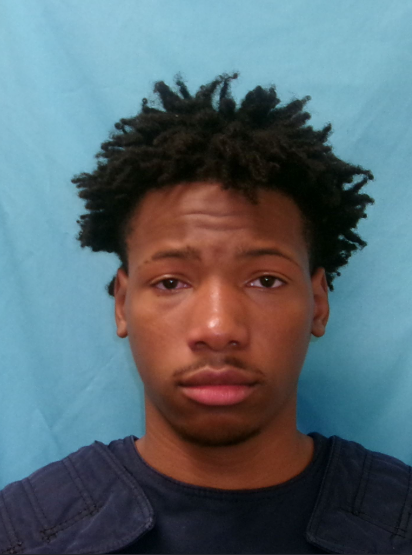
Karmelo Anthony Mugshot
What started as a deadly altercation between two teenagers at a Texas high school track meet has turned into a much larger debate over self-defense, race, social media misinformation, and crowdfunding.
This case is already getting a lot of attention because of the racial component surrounding it, but we have to be responsible enough not to reduce it to a Black-versus-white issue. At the end of the day, this case needs to be judged by the facts, the evidence, the witness testimony, and the law — not by social media outrage, political narratives, or racial division.
At the center of all of this are two families whose lives were changed forever.
On April 2, 2025, 17-year-old Austin Metcalf was fatally stabbed during a track meet at David Kuykendall Stadium in Frisco, Texas. Another 17-year-old, Karmelo Anthony, was arrested at the scene and later charged with first-degree murder. While Anthony has admitted to the stabbing itself, he has pleaded not guilty and maintains that he acted in self-defense.
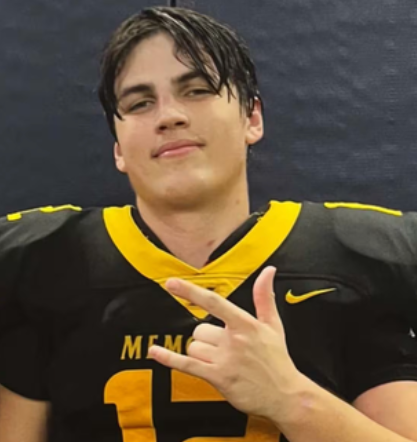
Austin Metcalf
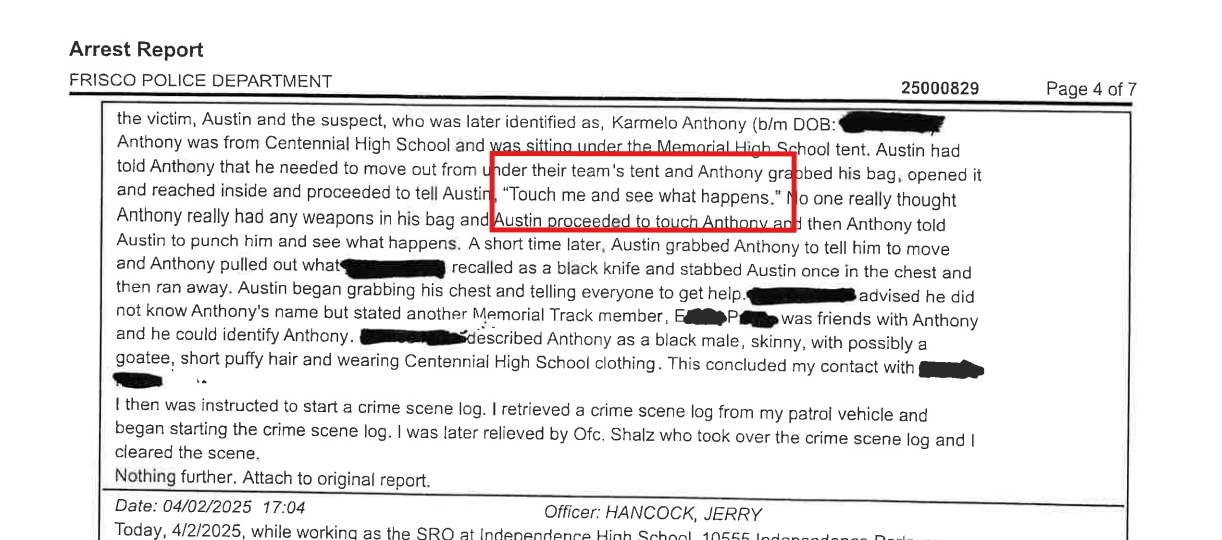
According to investigators, the incident reportedly began over a dispute involving seating under one of the team tents at the event. Witness accounts describe a verbal confrontation Anthony allegedly made a statement “ Touch me and see what happens” that turned physical before Anthony allegedly pulled a knife and stabbed Metcalf once in the chest. Austin later died from the wound.
And honestly, this is where the case becomes emotionally difficult for a lot of people.
This wasn’t some long-running feud. This wasn’t some organized criminal situation. This was a high school sporting event. Parents were there. Students were there. Teammates were there. One minute these kids are at a track meet, and the next minute one teenager is dead and another teenager is facing a murder charge that could impact the rest of his life.
That’s why this case hit so many people so hard.
But legally speaking, the case is going to come down to one major issue: self-defense.
Under Texas law, deadly force can be justified if someone reasonably believes they are in immediate danger of serious bodily injury or death. The defense is expected to argue that Anthony feared serious harm during the confrontation and reacted in that moment.
Prosecutors, however, are likely going to argue that whatever happened under that tent did not justify the use of deadly force.
And that is where this becomes a major uphill battle for the defense.
From what has publicly been reported so far, prosecutors will likely argue this started as a dispute between teenagers and escalated into a fatal stabbing. They are going to focus on proportionality — whether pulling a knife and using deadly force was a reasonable response to the threat Anthony says he faced.
One of the biggest questions heading into trial is going to be witness testimony.
Who initiated physical contact? How aggressive was the confrontation? Anthony truly in fear of serious bodily injury?
What did the people standing right there actually see?
Those details matter.
Another huge factor is whether there is surveillance footage or additional video evidence that has not yet been publicly released. In a case like this, video could completely shape how a jury views the confrontation.
But what really pushed this case into national headlines wasn’t just the stabbing itself. It was everything that happened afterward online.
Almost immediately, social media turned this case into a political and racial battleground.
Because Anthony is Black and Metcalf was white, the case quickly became heavily polarized. Different groups started framing the case through their own political and racial narratives before most of the evidence was even publicly available.
That created the perfect environment for misinformation.
There were fake autopsy reports circulating online. False rumors about toxicology. Fake accounts pretending to be officials. Viral claims about donations, houses, and money.
The amount of misinformation tied to this case became almost impossible to keep up with.
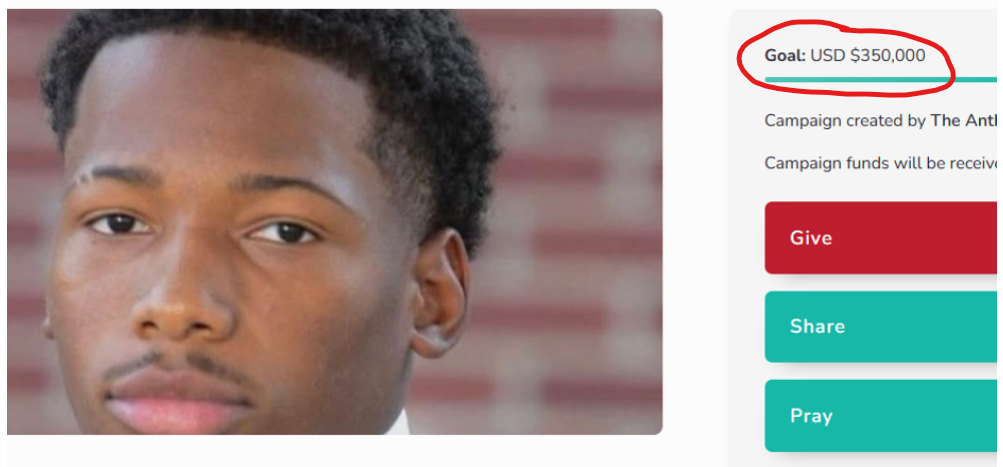
GoFundMe Account for Karmelo Anthony
The crowdfunding controversy also became a major part of the story.
After Anthony’s arrest, fundraising efforts for his legal defense reportedly raised hundreds of thousands of dollars. That triggered enormous backlash online, especially after viral claims surfaced suggesting the family used donations to move into a luxury property.
Later reporting suggested many of those claims were exaggerated or false, but by that point, the internet had already decided what it wanted to believe.
Meanwhile, Austin Metcalf’s family has had to endure all of this while grieving the loss of their son. One of the more heartbreaking moments connected to the case came when Austin’s twin brother accepted a posthumous diploma for him during graduation ceremonies in 2026.
That moment should remind everyone that beneath all the online arguments, political commentary, and social media fighting, this is still a real tragedy involving two teenagers and two devastated families.
Legally, Anthony is being tried as an adult under Texas law because he was 17 at the time of the incident. However, because he was still a juvenile, there are constitutional limits on sentencing if he is convicted.
And when this case finally does go to trial this upcoming Monday, jury selection could be one of the biggest challenges. The publicity surrounding this case has been massive. Finding jurors in and around Frisco who have not already formed strong opinions may not be easy.
At the end of the day, stripped of all the politics, all the race-baiting, all the online outrage, and all the misinformation, this case comes down to one central question:
Did Karmelo Anthony reasonably believe he needed to use deadly force in that moment?
That is the question a jury will have to answer.
Unfortunately, media access has been tightened ordered by the judge, and no video or audio will be allowed during the trial — something I personally disagree with. Court proceedings, especially in high-profile cases that generate significant public interest, should be as transparent and accessible as possible. Public trust in the justice system is strengthened when people are able to see and hear the process for themselves.