
90 Days Without Answers: Kyron Lopes’ Death Echoes Delgado-Garcia Case
Nearly 90 days after the death of 27-year-old Kyron Lopes following a Rhode Island Capitol Police training exercise, his mother, Annette Lopes, says her family is still waiting for answers: a finalized autopsy report, a clear explanation of what happened, and basic transparency from authorities.
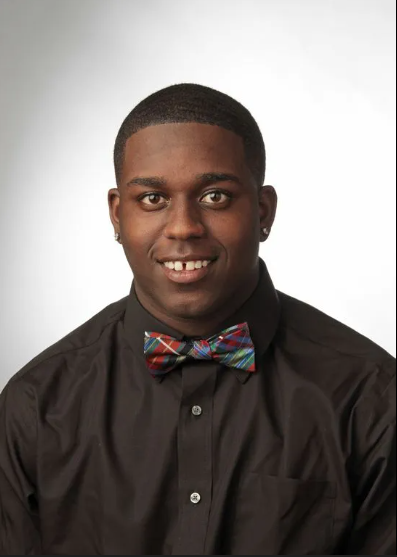
In an interview I conducted with her on Friday morning, Annette described a painful reality that feels disturbingly familiar. Her son’s case is already drawing comparisons to the death of Massachusetts State Police recruit Enrique Delgado-Garcia — another young man who entered academy training with hopes of a law enforcement career and never made it home.
Those parallels are personal for Annette. On April 2nd she sat in the Delgado-Garcia hearing at Worcester Superior Court in Worcester, Massachusetts, where three of the four troopers charged in his death appeared before a judge. Her presence there underscored how closely she sees her son’s case reflected in another family’s long fight for answers.
Like the Delgado-Garcia family, Annette says she has been left in the dark. Kyron’s autopsy was performed on December 29, 2025, but by March 29 — 90 days later, and on what would have been his birthday — she still had no final report and no meaningful update from investigators. She said the original death certificate remains pending.
Annette described Kyron as a hardworking, respectful, community-centered young man who played sports, worked steadily from his teens, and ultimately left casino work to pursue a career in law enforcement. “He was a really, really good kid,” she said. “He was a community kid.”
Looking back, Annette says Kyron had been raising concerns about the training. He often came home sore, exhausted, and complaining of headaches. He would soak in Epsom salt baths after training, and at one point told her, “Mom, I be feeling like they’re trying to kill me.” He also mentioned some of the drills they had to perform involved getting out of chokeholds. At the time, she took it as a comment about how intense the workouts were. Now, she hears it very differently.
That is one of the most striking similarities to the Delgado-Garcia case: questions about whether training crossed the line from tough preparation into something reckless, dangerous, or poorly supervised. In both cases, the core issue is whether those in charge missed warning signs or failed to intervene before it was too late.
Annette said Kyron had asthma, that the academy knew it, and that he had been medically cleared to participate in all training aspects of the academy. She now questions why his inhaler was allegedly outside the room instead of immediately accessible during intense defensive tactics training. She also questions whether there was proper medical monitoring and supervision in place.
According to Annette, she was told Kyron was rushed to the hospital on December 23, 2025 because he was reportedly having a panic attack — an explanation she says never made sense to her. He's never complained of anything like that before. At the hospital, she says a doctor mentioned some kind of fight involving “six guys” in the room with her son, a detail that only deepened her confusion. What she does know is that Kyron, in critical condition, said “I’m dying.” Those were the last words she heard him say.
She said doctors later told her Kyron had bleeding on the brain, organ failure, and severe swelling. Those details are in his medical report. That detail creates another painful parallel to Delgado-Garcia, whose death also involved catastrophic injury during academy training. While the official findings in Kyron’s case are still pending, Annette believes something happened in that room that has not yet been fully explained.
Annette also says she was told by someone she spoke with in the Rhode Island Attorney General's office that there is video of what happened. If that is true, she wants to know why the family is still waiting in the dark. That demand for transparency mirrors the fight in the Delgado-Garcia case, where family members and advocates have also pushed for answers about what was known, what was captured, and why it takes so long for the truth to come out.
To be clear, Kyron Lopes’ case is still under investigation, and it stands on its own facts. But the similarities are hard to ignore: a young recruit dies during training, a family waits months for answers, and serious questions emerge about supervision, tactics, and institutional transparency.
For Annette Lopes, this fight is about more than grief. It is about making sure Kyron’s death is not buried by delay or bureaucracy. “He got a story and it’s going to be told,” she said. And 90 days later, the silence surrounding his death is only making those questions louder.
Kyron Lopes deserves answers. His family deserves transparency. And the public deserves to know whether the very institutions trusted to train and protect future officers are instead failing the young men and women placed in their care. If real accountability does not follow these deaths, then more families may be forced to endure the same pain, the same silence, and the same unanswered questions.
NO MORE RECRUIT DEATHS!
Brian - LTL Media
